
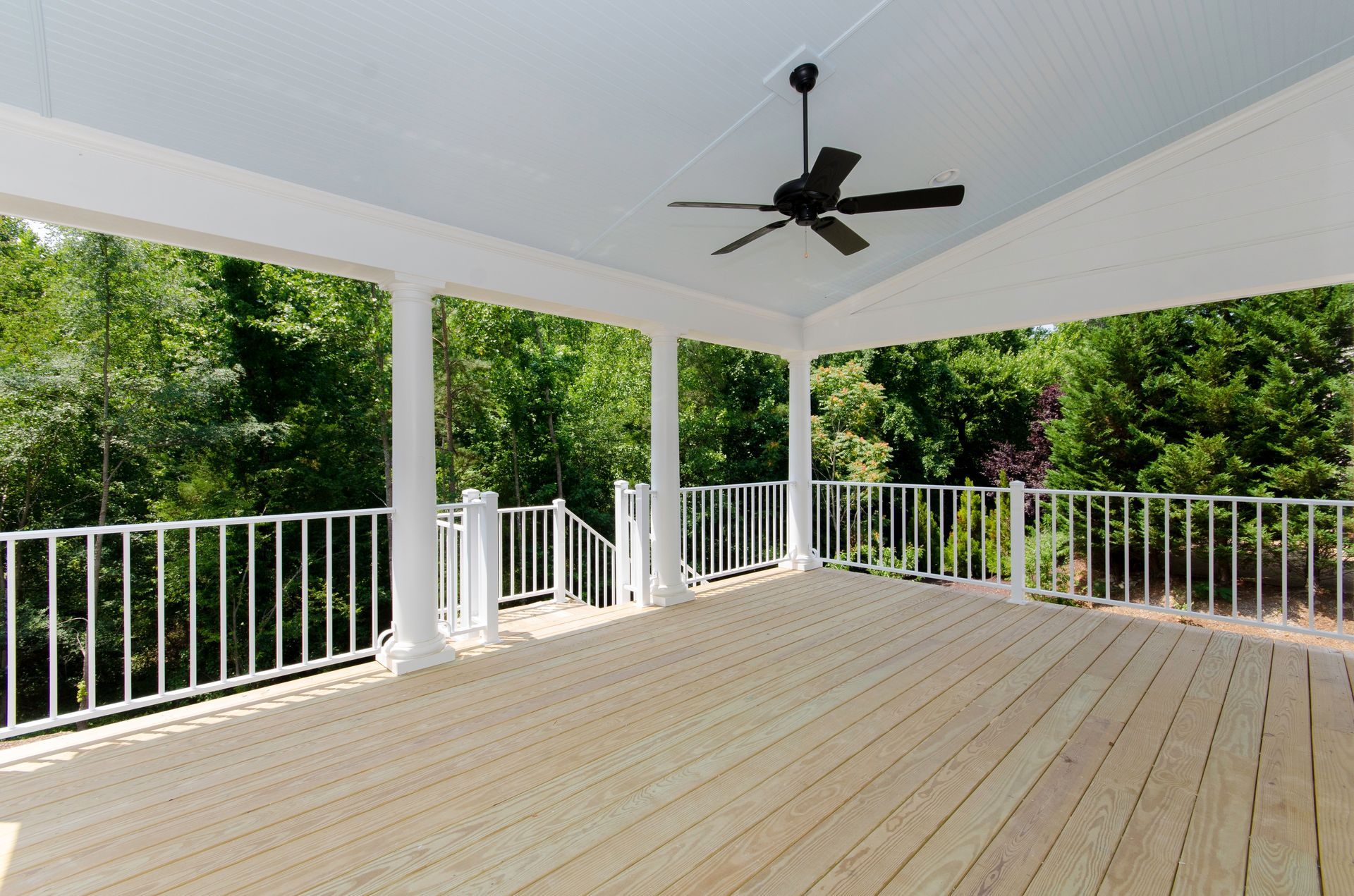
Low-Maintenance Railings Mounted for Temperature Shifts
Aluminum Railing in Chapel Hill for durability, minimal upkeep, and secure post installation
Temperature changes in the Triangle cause aluminum railings to expand and contract along their length, which means mounting hardware must allow slight movement without loosening over time. Posts need reinforced blocking between joists to prevent lateral flex when someone leans against the top rail, and spacing between sections has to account for expansion gaps that close during summer heat. James Fox Decks installs aluminum railing in Chapel Hill using precision fitting techniques that keep systems secure through seasonal temperature swings while maintaining the clean sightlines aluminum provides. Homeowners choosing aluminum avoid the sanding, staining, and rot concerns that come with wood railings, but only if the installation accounts for how metal behaves differently than lumber.
The installation process involves mounting posts to blocking installed between deck joists rather than surface-mounting to decking boards, which spreads lateral loads into the frame instead of relying on fasteners driven through half-inch material. Sections get assembled with proper expansion gaps at connection points, and all fasteners use stainless steel or coated hardware to prevent corrosion where dissimilar metals contact treated lumber.
Request a consultation to review aluminum railing options and confirm your deck framing can support the mounting requirements.
Why Reinforced Mounting Points Work for Aluminum Systems
Professional aluminum railing installation requires adding blocking between joists wherever posts will mount, creating a solid attachment surface that prevents posts from pivoting when pressure is applied to the top rail. Each post gets through-bolted using fasteners that penetrate the blocking and deck framing rather than just the surface boards, which distributes force into the structural frame instead of concentrating stress at a few screw points.
After installation, the railing system stays rigid without the slight wobble that comes from inadequate blocking, and the aluminum finish requires no maintenance beyond occasional washing to remove pollen and dirt. Posts remain plumb even after years of use because the mounting system doesn't rely on fasteners holding in wood that can shrink or compress, and the powder-coated surface won't show the weathering that painted wood railings develop within a few seasons.
The system includes proper tensioning at cable or baluster connections so components don't rattle when the deck vibrates from foot traffic. Deck specialization means understanding that aluminum railings transfer force differently than wood systems, requiring installation techniques specific to metal components rather than treating them like painted lumber.
Answers to Frequent Service Questions
Property owners considering aluminum railings often ask about installation details and how the systems perform compared to traditional wood guardrails.
What makes aluminum railing installation different from wood railing?
Aluminum posts require through-bolted connections to blocking rather than screwed surface mounts because the material doesn't have the same fastener-holding capacity as dimensional lumber.
How do Triangle temperature changes affect aluminum railings?
Metal expands and contracts more than wood, so sections need small gaps at connection points that close during hot weather and open slightly in winter without creating visible separations.
What preparation does the deck need before aluminum railing installation?
Blocking gets installed between joists at every post location to create solid backing, and rim joists are inspected to confirm they can handle through-bolted connections without splitting.
When should aluminum railings be chosen over wood or composite options?
Aluminum works well when you want to avoid ongoing maintenance and prefer the crisp lines metal provides, though it doesn't offer the same traditional appearance as wood railings with turned balusters.
What's included in aluminum railing installation?
The work covers blocking installation, post mounting with through-bolts, rail assembly with proper expansion gaps, and stainless fasteners throughout to prevent corrosion at metal-to-wood contact points.
James Fox Decks brings deck-only specialization to every railing project, which means installations are engineered for structural performance rather than basic hardware mounting. Schedule an evaluation to determine whether your deck framing needs reinforcement before aluminum railing installation begins.