
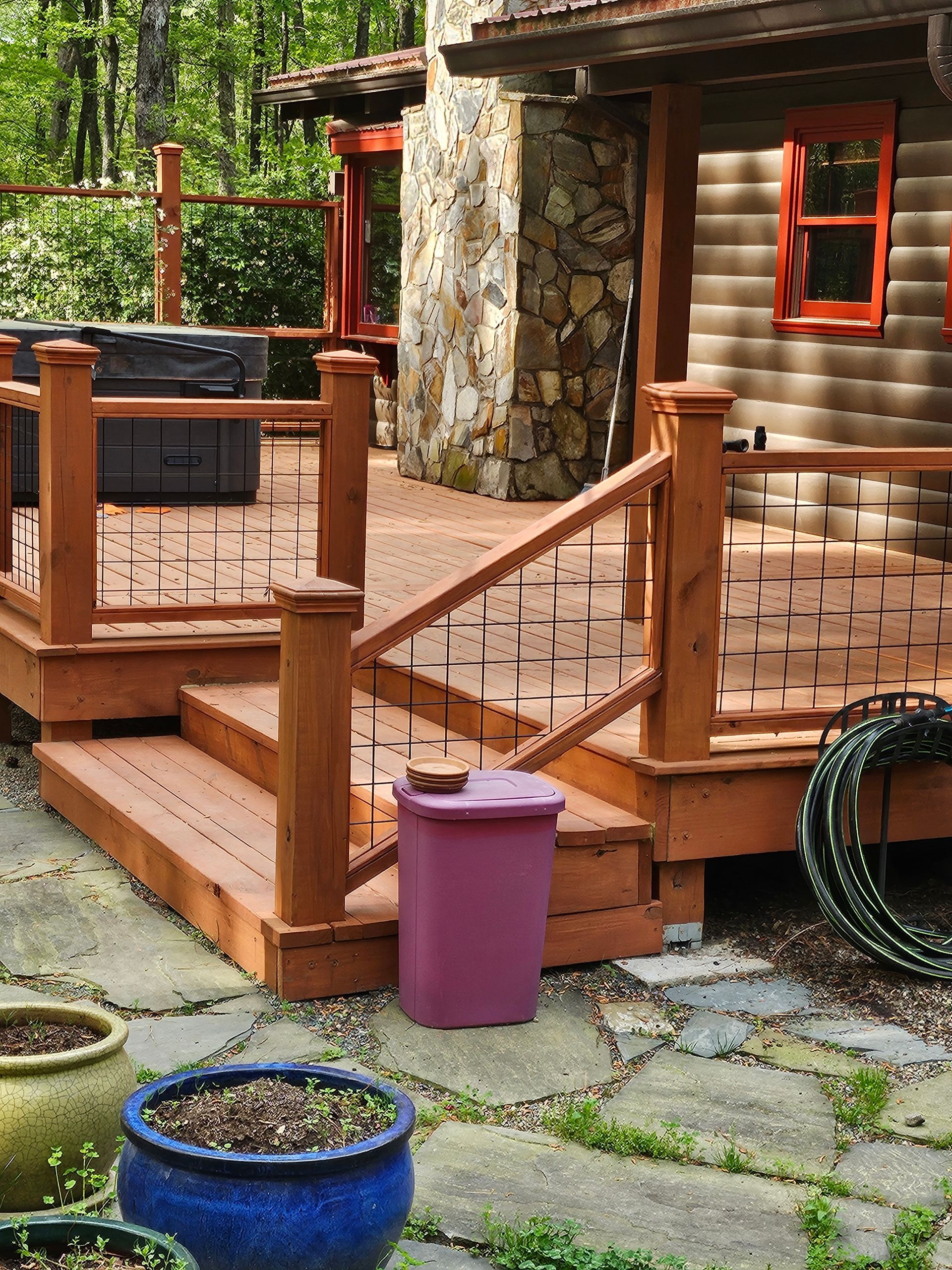
Precision Cable Systems Tensioned for Humidity Changes
Cable Railing in Chapel Hill for unobstructed views, modern design, and engineered installation
Cable railing systems use threaded tensioners at each cable run to maintain proper tightness as humidity causes wood posts to swell and shrink throughout the year. In Triangle climate conditions, cables installed during dry winter months will loosen slightly when summer humidity expands wood framing, which is why tensioners need enough adjustment range to compensate for seasonal movement without requiring disassembly. Posts must be spaced close enough to prevent cable deflection that exceeds code limits when pressure is applied between supports, typically thirty-six inches or less depending on cable diameter and local building requirements. James Fox Decks installs cable railing in Chapel Hill using engineering-grade hardware and installation tension techniques that keep cables taut through seasonal changes while meeting guardrail strength standards.
The installation process involves through-drilling posts for cable runs at precise intervals to maintain code-compliant spacing, installing threaded tensioners that allow adjustment without removing cables, and setting initial tension high enough that seasonal wood expansion won't create sag. Each cable gets tested after tensioning to confirm it meets deflection limits when pushed at mid-span.
Schedule a site assessment to verify your deck layout and post spacing will support cable railing installation requirements.
What Proper Cable Installation Requires
Engineering-grade cable railing installation starts with posts strong enough to handle the lateral load cables create when tensioned—typically four-by-four posts through-bolted to deck framing with blocking added between joists for reinforcement. Cables run through precisely drilled holes at intervals that keep spacing within code limits, usually three to four inches apart depending on local requirements, and threaded tensioners get installed at one end of each run to allow tightening as wood movement affects cable tension over time.
Once installation is complete, you notice the view through the railing remains unobstructed compared to traditional balusters, and cables stay tight enough to prevent the bouncing or sagging that develops when systems are under-tensioned or when posts flex due to inadequate blocking. The stainless steel cables don't require painting or sealing, and the system maintains its appearance without the maintenance wood or composite balusters need.
The work includes tensioning adjustments as needed during the first year while the deck settles and lumber reaches equilibrium moisture content, ensuring cables maintain proper tightness after seasonal humidity cycles. Twenty-five years of experience means recognizing how cable systems fail when tensioners lack sufficient range or when post spacing allows excessive deflection between supports, issues that only become apparent when you've installed enough systems to see long-term performance patterns.
Common Questions About This Service
Homeowners planning cable railing projects often ask about installation requirements and how the systems perform in local climate conditions.
What's different about cable railing installation compared to traditional balusters?
Cable systems create lateral tension on posts that balusters don't generate, requiring through-bolted post connections and reinforced blocking rather than surface-mounted posts that work for vertical baluster loads.
How does humidity in Chapel Hill affect cable tension?
Wood posts expand when humidity increases and shrink during dry periods, which changes the distance between cable anchor points and requires threaded tensioners with enough adjustment range to maintain proper tightness year-round.
What determines the spacing between cable runs?
Building codes limit the gap to prevent objects from passing through, typically requiring cables spaced close enough that a four-inch sphere can't fit between runs, which translates to roughly three-inch spacing for most installations.
When do cables need re-tensioning after installation?
Most systems require minor adjustment during the first year as the deck settles and lumber reaches stable moisture content, after which cables typically maintain tension for several years before needing attention.
What type of hardware is used for cable railing?
Stainless steel cables run through posts to threaded tensioners at each cable end, with all fasteners and fittings also stainless to prevent corrosion where metal contacts treated lumber or aluminum posts.
James Fox Decks provides immediate response to cable railing consultations and handles the work with owner-operated service rather than subcontracting installation to crews unfamiliar with precision tensioning requirements. Contact us to discuss whether your deck framing can support cable railing or if reinforcement is needed before installation.