
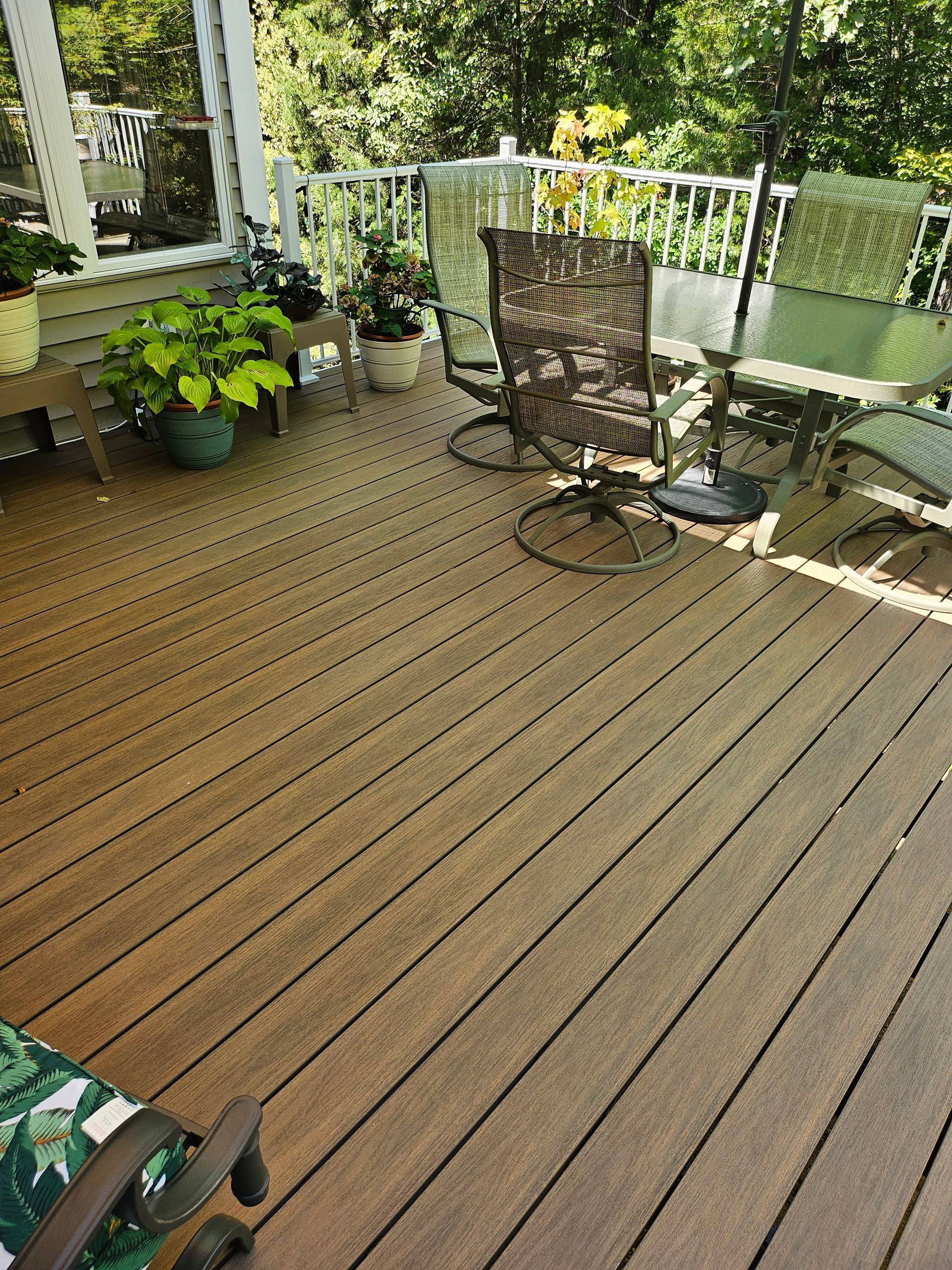
Low-Maintenance Decking Done Right
Composite Deck Installation in Chapel Hill for homeowners wanting durable outdoor spaces without annual refinishing requirements
Triangle temperature swings create expansion and contraction cycles that composite decking materials respond to differently than traditional lumber, requiring precise gap calculations during installation. Composite deck installation from James Fox Decks accounts for thermal movement through proper spacing between boards, preventing the buckling and compression damage that occurs when materials expand against tight installations during summer heat. You're working with a deck specialist who understands composite material properties rather than a general contractor treating synthetic decking like wood lumber.
The installation process involves fastener systems designed specifically for composite boards, with hidden clips or screws placed according to manufacturer specifications that accommodate thermal expansion. Frame spacing requirements differ from wood deck construction, with composite materials needing closer joist intervals to prevent flexing under foot traffic.
Request a detailed estimate to compare composite material options and discuss railing integration for your planned deck layout.
What Changes After Composite Installation Completes
Proper composite installation creates expansion gaps at every board end and wherever decking meets fixed structures like posts or house walls, allowing materials to grow and shrink with temperature changes without binding or warping. The gaps measure precisely according to ambient temperature at installation time, with wider spacing required for cold-weather installations when boards will expand significantly during summer months. This calculation prevents the compression buckling visible on composite decks installed without thermal movement accommodation.
You'll notice a finished deck that maintains consistent appearance without staining, sealing, or sanding throughout its service life, shedding water and resisting the mildew growth common on wood surfaces in Triangle humidity. The surface stays cooler underfoot than earlier composite formulations, with modern capped composites providing fade resistance that maintains color consistency across sun-exposed and shaded sections. Aluminum or cable railing systems integrate cleanly with composite decking, creating cohesive low-maintenance outdoor living areas.
Installation includes attention to drainage and airflow beneath the deck surface, with composite materials requiring adequate ventilation to prevent moisture accumulation that affects substructure lumber. James Fox Decks has worked with various composite brands and understands how installation requirements vary between manufacturers, applying specific fastening patterns and gap calculations rather than using generic approaches across different material lines.
Answers to Frequent Service Questions
Homeowners considering composite decking want clarity on how material behavior differs from wood and what installation details affect long-term performance in local climate conditions.
What makes expansion gap calculation critical for composite deck installation?
Composite materials expand and contract more than wood lumber as temperatures change, with boards growing longer during summer heat and shrinking during winter cold. Gaps sized incorrectly for installation temperature cause boards to compress against each other when expanding, creating waves and buckling that require disassembly and reinstallation to correct.
How does composite decking perform in Chapel Hill's temperature range?
Triangle summers reaching the mid-90s cause composite boards to expand significantly from their winter dimensions, while humidity affects some composite formulations more than others. Capped composite products resist moisture absorption better than uncapped versions, maintaining more stable dimensions and showing less mildew growth on shaded deck sections.
What framing differences do composite materials require compared to wood decking?
Composite boards flex more than wood under weight, requiring joist spacing at 12 or 16 inches on center depending on board thickness and manufacturer specifications. Wider joist spacing appropriate for wood decking creates excessive bounce and deflection with composite materials, making solid framing layout essential during initial construction.
Why do fastening systems vary between composite deck brands?
Each manufacturer engineers boards with specific fastener compatibility, using hidden clip systems, grooved edges, or pre-drilling requirements that differ between product lines. Using incorrect fasteners or installation patterns voids material warranties and creates surface damage or structural inadequacy that shows up as boards loosen or crack over time.
How does maintenance compare between composite and wood decking?
Composite surfaces need periodic washing to remove pollen and dirt but require no staining, sealing, or sanding throughout their service life. You'll spend significantly less time on deck upkeep compared to wood maintenance cycles, though composite materials cost more initially than pressure-treated lumber installations.
James Fox Decks brings composite installation expertise developed through years of deck-only construction focus, understanding thermal expansion calculations and manufacturer-specific requirements that general contractors often miss. Schedule an on-site consultation to discuss composite options and review how material choice affects your specific deck design and budget parameters.