
Refinishing That Survives Triangle Humidity
Deck Staining & Sealing in Chapel Hill for weathered decking showing moisture damage and peeling finish
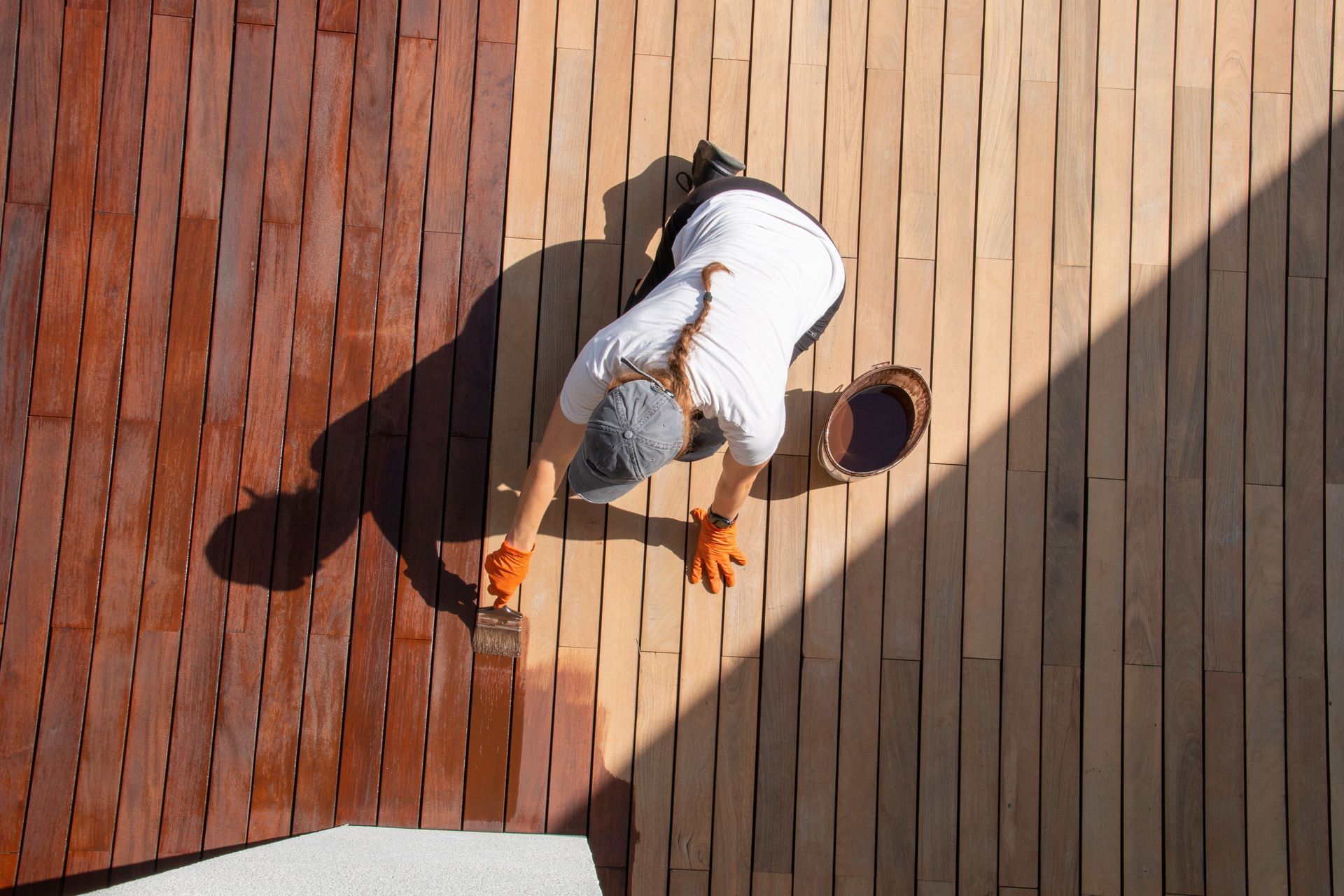
Peeling stain and gray weathered wood signal that your deck needs refinishing before moisture penetrates deeper into the lumber. James Fox Decks provides professional deck staining and sealing services throughout Chapel Hill, using moisture meter testing to confirm wood is dry enough for stain adhesion before any coating goes down. The Triangle's humid climate creates specific challenges for deck finishes, requiring proper preparation timing and weather-window selection that many contractors skip when rushing through refinishing jobs.
The process begins with pressure washing to remove dirt, mildew, and loose finish, followed by several days of drying time before moisture levels are tested and stain application begins. Sanding addresses areas where old stain is peeling, creating a smooth base for new coating rather than stripping the entire deck down to bare wood. This approach preserves wood fibers while removing failed finish sections that would otherwise prevent new stain from bonding properly.
Schedule a deck evaluation to determine current moisture levels and refinishing preparation requirements.
Why Moisture Testing Prevents Finish Failure
Stain applied over damp wood fails within months, bubbling and peeling as trapped moisture pushes outward through the coating. You'll see moisture meter readings taken across multiple deck boards after pressure washing, confirming that wood has dried to acceptable levels before any stain touches the surface. Triangle humidity means lumber holds moisture longer than in drier climates, so multi-day drying periods between washing and staining aren't optional steps but essential requirements for finish adhesion.
After proper preparation and application, you'll notice uniform color coverage that sheds water rather than absorbing it, with sealed wood that resists the mildew growth common on untreated Triangle decks. The finish protects against UV degradation and moisture intrusion, maintaining wood integrity through seasonal weather changes instead of allowing gray weathering and surface checking to progress. Sealed decking dries faster after rain and shows less dirt accumulation between cleanings.
Weather timing affects application windows significantly, with stain requiring at least 24 hours of dry conditions after application for proper curing. The refinishing includes thorough sanding over peeling areas rather than chemical stripping, which raises wood grain and requires additional sanding steps that extend project timelines without improving final results.
Common Questions About This Service
Property owners considering deck refinishing want to understand how preparation steps affect finish longevity and what differentiates quality staining from quick applications.
How does moisture meter testing work for deck preparation?
A moisture meter measures water content percentage in wood by inserting pins into deck boards at multiple locations. Readings above 15 percent indicate the wood is too wet for stain application, requiring additional drying time to prevent finish failure from trapped moisture pushing through the coating as temperatures rise.
What happens during the pressure washing preparation step?
High-pressure water removes dirt, mildew, algae, and loose finish from deck surfaces, penetrating into wood grain to clean areas that surface scrubbing misses. The process requires several days of dry weather afterward for lumber to release absorbed water before moisture testing confirms readiness for stain.
Why sand peeling stain instead of stripping the entire deck?
Sanding removes failed finish sections without damaging sound wood fibers underneath, creating smooth transitions between bare and coated areas for even stain absorption. Chemical stripping raises wood grain across the entire surface, requiring extensive additional sanding and creating rougher final texture than selective preparation of problem areas.
When is the best time to refinish a deck in Chapel Hill?
Late spring and early fall provide ideal weather windows with moderate humidity and consistent dry periods, allowing proper drying time between washing and staining. Summer humidity extends drying times significantly, while winter temperatures slow stain curing and increase the risk of moisture trapping before finish sets properly.
How long does stain last on Triangle decks before reapplication is needed?
Quality stain with proper preparation typically lasts two to four years depending on sun exposure and deck usage, with horizontal surfaces showing wear faster than vertical railings. You'll notice water absorption increasing and color fading as the finish degrades, signaling that reapplication timing is approaching.
James Fox Decks applies specialized deck refinishing knowledge to every Triangle project, working through proper preparation sequences rather than rushing applications to meet artificial timelines. Arrange a property visit to assess your deck's current condition and discuss weather-appropriate scheduling for refinishing work.