
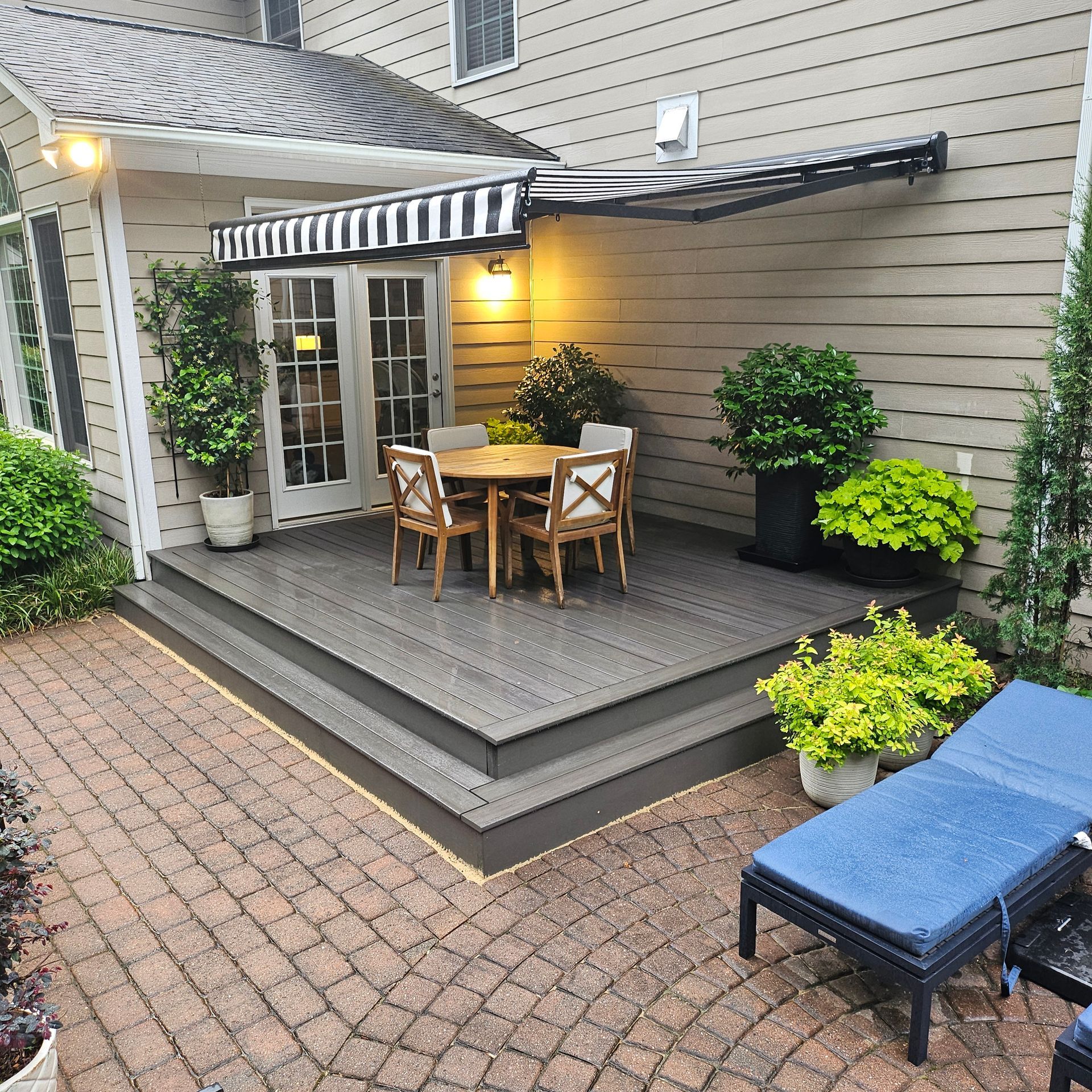
Existing Decks Extended Without Rebuilding Foundations
Deck Add-Ons in Chapel Hill for increased space, structural expansion, and seamless integration
Expanding a deck involves more than attaching new framing to old boards—the existing structure must support additional load, new footings need to align with the original deck plane, and the connection between sections has to transfer weight without creating a weak point where boards meet. James Fox Decks handles deck add-ons in Chapel Hill by integrating new construction with your current framework so the expansion functions as a single continuous structure rather than two separate platforms joined together. Growing families in Triangle communities often need larger outdoor spaces without the cost of tearing down a deck that still has serviceable framing.
The expansion process starts with assessing whether your existing joists and beams can carry the added load from a larger footprint, then designing footing placement for new support posts that maintains consistent height across both sections. New framing gets through-bolted to existing rim joists using galvanized hardware rated for structural connections, not just surface-mounted with screws.
Arrange an on-site evaluation to review how your existing deck can accommodate expansion without requiring full reconstruction.
What Changes After Deck Expansion Completes
Structural expansion requires removing sections of existing decking where new framing will tie in, installing additional beams and joists that align with the current support grid, and pouring footings that bring new posts to the exact elevation of your original deck. The connection between old and new framing uses through-bolted ledger plates rather than relying on fasteners driven into end grain, which prevents the joint from separating as wood expands and contracts with humidity changes.
Once construction finishes, the deck surface sits level across the entire expanded area without a visible seam or step between sections, and walking from the original deck onto the addition feels identical because both areas share the same joist spacing and support structure. New decking matches your existing board width and layout pattern so the expansion blends visually with the original construction.
The work includes an unlimited guarantee because deck-only specialization means understanding how expansions fail when connection points aren't engineered to handle shear forces, a common issue when general contractors treat add-ons as simple carpentry rather than structural integration projects. The focus stays on creating a unified deck that performs as one system rather than two platforms that happen to touch.
Questions Before Starting Your Project
Homeowners planning expansions typically want to know how the process affects their current deck and what limitations exist based on existing construction.
What determines whether an existing deck can support an addition?
The current joist size, beam span, and footing capacity all get evaluated to confirm they can handle additional load, and if the original framing is undersized, reinforcement gets added before the expansion begins.
How does the new section connect to the original deck?
New rim joists get through-bolted to existing framing using galvanized carriage bolts rather than screws, creating a mechanical connection that won't pull apart when lateral forces shift the structure.
What happens if the existing deck isn't level?
The new section gets built to match the current deck plane even if it's slightly off level, maintaining a continuous surface, or if the slope is severe enough to cause drainage problems, the entire deck can be adjusted during expansion.
When is the best time to add onto a deck in Chapel Hill?
Scheduling expansion during dry months allows concrete footings to cure properly and gives new lumber time to acclimate before seasonal humidity swings cause dimensional changes.
What's included in the expansion work?
The project covers new footings, framing, decking, and any railings or stairs needed for the addition, along with integrating drainage and flashing so water doesn't collect where new construction meets the original deck.
James Fox Decks provides next-day service for expansion consultations, and because the business focuses exclusively on decks rather than multiple trades, the approach centers on structural integrity rather than cosmetic attachment. Contact us to discuss how your deck can be expanded using the existing framework as a foundation.